


Concert Review: Breaking Benjamin, Chevelle & STARSET Review at Walmart AMP Arkansas
Somewhere between a sinister intergalactic spectacle, a drummer losing his glasses, thousands of Arkansans becoming an impromptu choir, and a hilariously nostalgic Windows computer meltdown, Tuesday night at Walmart AMP became a reminder of why rock music refuses to age gracefully.
And thank God for that.
Breaking Benjamin, Chevelle, and STARSET delivered three wildly different interpretations of heavy music to Rogers, Arkansas. One built an entire universe. Another proved that a guitar riff can still shake the foundation of your soul. And the headliner reminded an entire generation why certain songs never stop hurting in all the right ways.
There were crushing guitars, soaring orchestral arrangements, outrageous visuals, unexpected comedy, and enough early-2000s nostalgia to make anyone who ever downloaded music through LimeWire feel personally attacked.
But the biggest surprise wasn’t necessarily the band with the longest history or the most recognizable radio hits.
It was the one that made the amphitheater feel like another planet.
STARSET: BEAUTIFULLY SINISTER, CINEMATICALLY BRILLIANT
Holy hell, STARSET.
There are concerts, there are performances, and then there are bands that appear determined to transport an entire audience into an alternate reality.
STARSET belongs firmly in that third category.
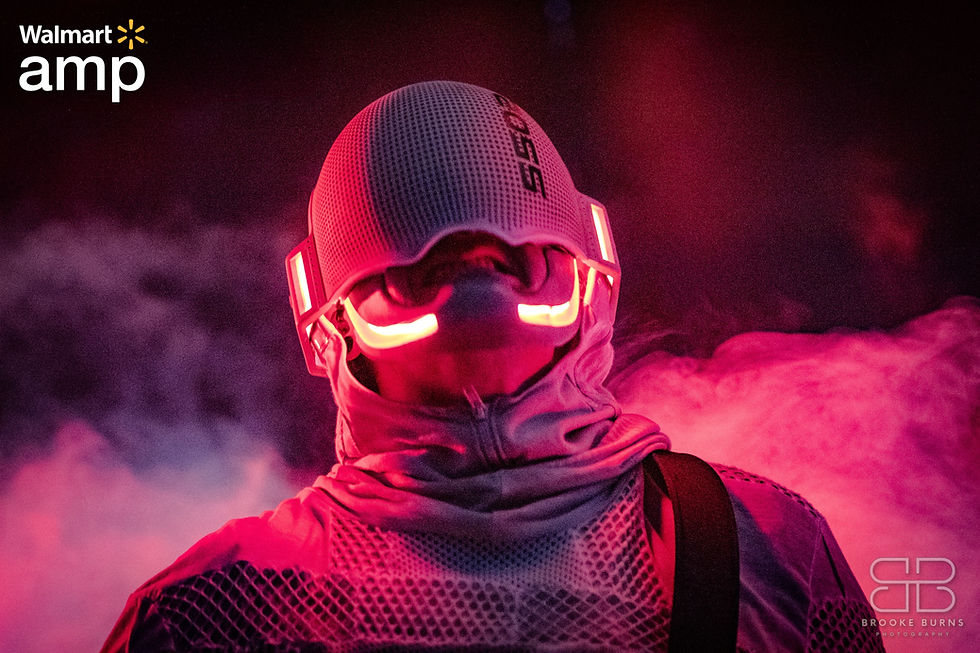
Led by Dustin Bates, the cinematic rock outfit delivered what was, for this reviewer, the most captivating performance of the evening.
The atmosphere was downright sinister.
Elaborate, otherworldly costumes transformed the musicians into characters seemingly pulled from a darker corner of science fiction. Massive video screens extended the experience, displaying spacecraft and astronaut-related imagery that made the stage feel less like a traditional concert setting and more like the interior of an interstellar nightmare.
It was beautiful.
It was unsettling.
And it was absolutely spectacular.
What makes STARSET particularly fascinating, however, is that the visual production isn’t compensating for a lack of musical substance. Quite the opposite.
The band’s sound was impeccable.
Amid the distorted guitars and electronic elements, sweeping orchestral instrumentation introduced an almost dreamlike quality to the music. Those symphonic layers softened the edges of the heavier arrangements without diminishing their impact, creating a fascinating contrast between mechanical aggression and ethereal beauty.
There was something almost hypnotic about it.
One moment, the music felt ominous and oppressive. The next, it opened into something expansive, cinematic, and unexpectedly delicate.
That balance is extraordinarily difficult to achieve, particularly in a live environment where dense arrangements can become an indistinguishable wall of sound.
STARSET managed to preserve the clarity and atmosphere that make its music so distinctive.
Every element seemed to have room to breathe.
And when the orchestral textures intertwined with the heavier passages, the result was genuinely transportive.
The sinister extraterrestrial aesthetic could easily have become a gimmick in less capable hands. Instead, the costumes, spacecraft imagery, and music complemented one another to create a cohesive artistic experience.
The production wasn’t merely something to look at while the band played.
It was part of the storytelling.
STARSET understands that heavy music doesn’t always have to confront its audience with brute force. Sometimes the most powerful moments arrive wrapped in beauty, mystery, and a little existential dread.
On a night filled with established rock royalty, STARSET delivered the performance that lingered most vividly.
They didn’t just play a set. They created an entire world, invited Arkansas inside, and made leaving it feel like a disappointment.
CHEVELLE: NO FRILLS, NO MERCY, AND ABSOLUTELY NO MISSED BEATS
Then came Chevelle.
And if STARSET transported the audience into another universe, Chevelle dragged everyone straight back to Earth by the collar.
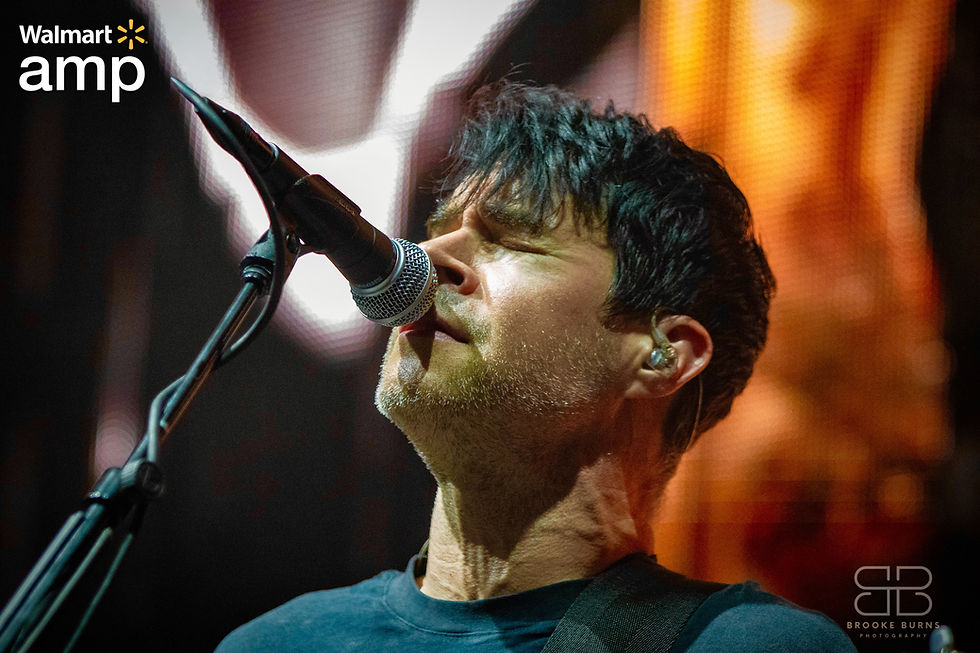
There is something almost offensively effortless about Pete Loeffler’s ability to scream.
While other vocalists practically fold themselves in half attempting to produce that level of aggression, Pete appears almost suspiciously comfortable.
His face barely seems to acknowledge the punishment his vocal cords are supposedly enduring.
It’s equal parts fascinating and infuriating.
At one point, Pete playfully teased Arkansas about whether everyone was ready for a little of his signature crunchy-throated vocal delivery.
Sir, respectfully, that’s what we came for.
And Arkansas was more than willing to prove it.
When Chevelle launched into “Send the Pain Below,” the amphitheater became an instant sing-along. Pete heard the voices coming back and encouraged the audience to finish the lyrics.
“Come on, finish it!”
The crowd obliged.
“That’s it!”
It was a perfect reminder that some songs eventually become bigger than the bands that created them.
They’re no longer simply recordings. They’re shared memories, carried by thousands of voices that somehow still know every word.
Later, Pete announced that the band was digging into some older material.
“We’re getting into some old shit now.”
“Comfortable Liar” followed, reminding everyone exactly why Chevelle’s early catalog remains such a formidable force.
And when “The Red” entered the picture, Arkansas once again proved that certain choruses are permanently engraved into the collective memory of rock fans.
But beyond the music, Chevelle provided some of the night’s most endearingly human moments.
Pete performed with his familiar Persian-style rug beneath his feet and Vans on them, an understated setup that seems beautifully indifferent to the passage of time.
At one point, he switched to an all-black Fender Stratocaster with black pickups, delivering another sharp visual detail to an otherwise stripped-down presentation.
Meanwhile, drummer Sam Loeffler managed to lose his glasses in the middle of a song.
His rhythm?
Completely unbothered.
Somewhere between the crashing cymbals and relentless percussion, his eyewear apparently decided to pursue a solo career.
Sam, however, never missed a beat.
That’s the beauty of watching musicians who have spent decades perfecting their craft. Even when something goes sideways, the performance keeps moving.
Chevelle’s brilliance has always been rooted in restraint.
The band doesn’t need elaborate theatrics or an endless parade of distractions. Its music thrives on tension, precision, and the ability to make even a deceptively simple riff feel enormous.
As the performance ended, the musicians left their guitars feeding a wash of reverb across the stage.
The sound lingered after the band had departed.
No elaborate farewell required.
They left the noise behind and walked away.
Like absolute kings.
BREAKING BENJAMIN: THE SYSTEM CRASHED, BUT THE MUSIC NEVER DID

Breaking Benjamin’s introduction deserves its own paragraph.
Possibly its own computer repair technician.
Before the band even began playing, the massive video screens erupted into a gloriously nostalgic technological fever dream.
Vintage Windows-style graphics, a reference to Halo 2, and an increasingly ridiculous collection of computer pop-ups transported the audience back to an era when the internet was lawless, downloading a song was a gamble, and LimeWire was practically a personality trait.
The sequence even featured a LimeWire-inspired interface for choosing the opening song before the simulated computer chaos reached its inevitable conclusion.
A crash.
Because, naturally.
For anyone who grew up during the golden age of alternative rock and questionable internet downloads, the entire production was hilariously on brand.
And then Breaking Benjamin got down to business.
They played songs that immediately reminded the crowd why Benjamin Burnley’s songwriting has remained so deeply embedded in modern rock culture.
But one of the most compelling aspects of the performance wasn’t something Burnley did.
It was something he largely avoided.
The spotlight.
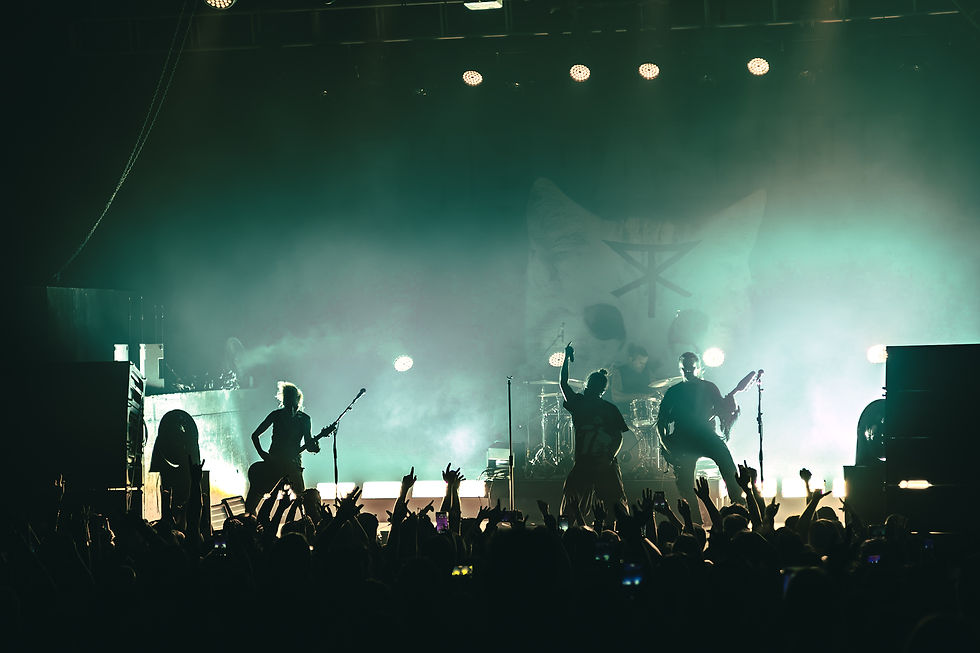
Throughout the performance, Burnley remained remarkably difficult to see under direct illumination. Rather than the brightly lit, center-stage presentation audiences might expect from a headlining vocalist, he frequently appeared in darkness or dramatic backlight.
For a concert photographer, this made capturing his performance particularly challenging.
But artistically, the shadows created something interesting.
The absence of conventional front lighting shifted the visual emphasis away from the man himself and toward the music and atmosphere surrounding him.
In an industry obsessed with celebrity, image, and constant visibility, there was something striking about watching one of modern rock’s most recognizable frontmen perform without commanding every available spotlight.
Burnley’s guitar work also deserved attention, reflecting the seriousness and musical discipline beneath the band’s massive choruses.
Breaking Benjamin has always occupied a fascinating emotional space.
The music is heavy, but its greatest strength isn’t aggression.
It’s vulnerability.
These are songs about internal battles, emotional exhaustion, isolation, anger, and the determination to keep moving when standing still would be easier.
For many listeners, Breaking Benjamin isn’t merely a band.
It’s the soundtrack to entire chapters of their lives.
The heartbreaks.
The bad decisions.
The people who disappeared.
The versions of themselves they had to outgrow.
And sometimes, the songs are reminders that surviving those chapters is its own kind of victory.
Beneath the nostalgic visuals and familiar choruses, Breaking Benjamin demonstrated why music built on genuine emotional connection tends to outlive the trends surrounding it.
The years move forward.
The industry reinvents itself.
But the songs remain.
THE VERDICT: THREE BANDS, THREE WORLDS, ONE HELL OF A NIGHT
What made this evening so memorable wasn’t simply the collection of recognizable names.
It was the contrast.
STARSET turned the stage into a sinister science-fiction universe, complete with elaborate costumes, spacecraft imagery, and beautifully layered orchestral soundscapes. Its marriage of theatrical ambition and musical precision made it the unexpected standout of the evening.
Chevelle stripped everything back to its essentials, delivering punishing riffs, effortless vocal intensity, and enough personality to remind everyone that rock music should never take itself too seriously.
Breaking Benjamin delivered the emotional weight, pairing its enduring catalog with a clever, nostalgia-soaked introduction and a performance where the music commanded attention even when the frontman avoided the light.
And somewhere in the middle of it all, a drummer lost his glasses.
A vintage computer crashed.
Thousands of voices finished a song together.
And a band dressed for an interstellar nightmare created something unexpectedly beautiful.
That’s what makes live music extraordinary.
You can stream the songs. You can memorize the lyrics. You can watch a thousand videos of the same tour.
But you cannot predict the exact moments that will stay with you when the lights finally go down.
For one Tuesday night in Rogers, Arkansas, rock music was simultaneously nostalgic, futuristic, aggressive, hilarious, and profoundly human.
The computers crashed.
The glasses disappeared.
The spaceships took flight.
And the guitars never stopped screaming.
Some things really are better left loud.
Comments